
Upgrading your laboratory’s analytical capabilities doesn't always mean absorbing the steep depreciation of brand-new instruments. The secondary market offers immense value, allowing facilities to acquire high-end technology while maximizing capital budgets. However, evaluating the pricing of used lab equipment requires a highly technical and strategic approach.
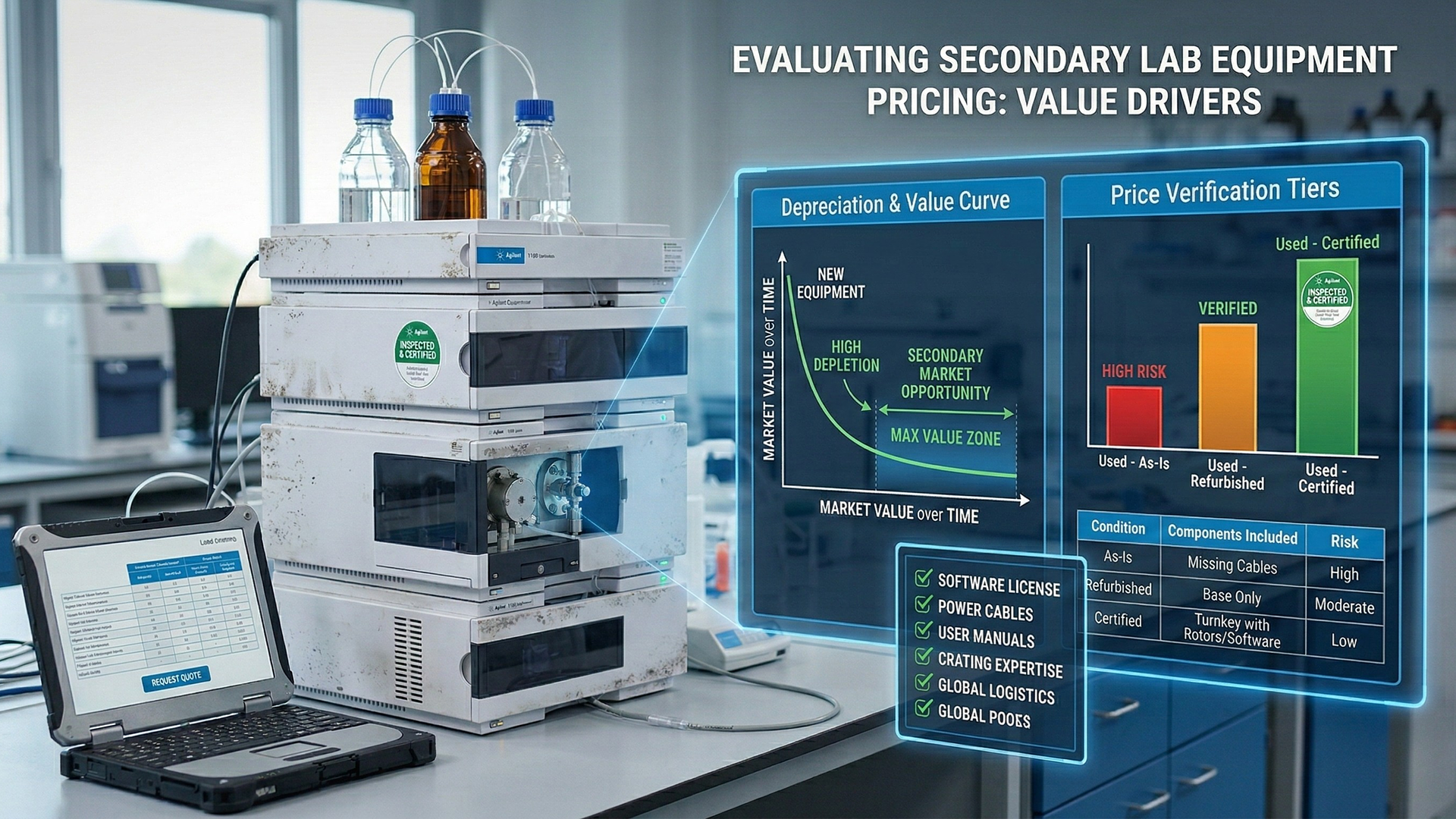
A lower price tag does not automatically guarantee a better return on investment. To make an informed procurement decision, lab managers and buyers must look past the top-line number and evaluate the underlying factors that dictate competitive market pricing.
1. Condition Transparency: "As-Is" vs. "Used / Inspected"
The single most significant driver of pricing in the secondary market is the verified condition of the instrument. When browsing listings, the condition notes dictate the baseline value.
- Used / As-Is: These units are heavily discounted but carry a high degree of operational risk. They may power on but lack functional verification, potentially leading to costly downtime.
- Used / Inspected: Equipment in this category commands a competitive market price because the operational risk has been mitigated. These instruments have undergone a professional overview, functional testing, and verification.
When comparing quotes, ensure you are comparing equivalent conditions. A fully inspected unit priced slightly higher than an "as-is" unit routinely saves thousands of dollars in post-purchase repairs.
2. Specification Matching and Exact Categorization
High-end lab instruments are highly specialized. When evaluating a price, break the system down by its core hierarchy: [Brand] [Model] [Key Spec] [Condition].
A slight variation in a key specification—such as the maximum RPM in a floor centrifuge or the specific detector array on an HPLC—drastically shifts the equipment's fair market value. When reviewing a vendor's pricing, verify that they have accurately categorized the equipment and are pricing it against the "closest fit" in the current market, rather than a generic baseline model.
3. The "Included" Audit
One of the most common pitfalls in evaluating secondary equipment pricing is ignoring the accessories. A base unit listed at a seemingly unbeatable price can quickly become the most expensive option once you factor in missing proprietary components.
Always look for a completely transparent, itemized "Included" list. A comprehensive, high-value listing should detail:
- Necessary power, communication cables, and proprietary adapters.
- Specific rotors, analytical blocks, or application modules.
- Operational software (with notes on license transferability).
- User manuals and technical documentation.
A turnkey system offers far greater operational value than a stripped-down unit that requires your team to spend weeks sourcing aftermarket parts.
4. Factoring in Procurement and Global Logistics
The true cost of acquisition extends beyond the hardware itself. When generating purchase orders and reviewing quotes, you must factor the vendor's administrative and logistical capabilities into the overall value.
- Streamlined Administration: Vendors who provide accurate quotes, clear invoices, and prompt communication significantly reduce the administrative burden on your procurement team.
- International Shipping Expertise: For heavy, sensitive instruments, professional crating and freight logistics are critical. A vendor experienced in managing international shipping and customs documentation ensures your equipment arrives safely, legally, and on schedule.
Secure the Right Equipment for Your Lab
Evaluating secondary lab equipment pricing is ultimately about assessing total value. By demanding transparent condition notes, verifying key specifications, and partnering with operationally sound vendors, you can confidently navigate the market and secure reliable instruments for your workflow.
Ready to upgrade your lab's capabilities? Browse our latest fully inspected inventory, or contact our team today to request a detailed quote and custom freight estimate