
Relocating, upgrading, or closing a laboratory requires more than just packing boxes. Dealing with complex scientific assets involves strict compliance, logistical hurdles, and a clear strategy for lab asset recovery.
Whether you are looking to sell used lab equipment to free up capital or simply need to clear out space safely, a structured approach is essential. This guide breaks down the technical and administrative steps to efficiently decommission your facility and monetize your surplus instruments.
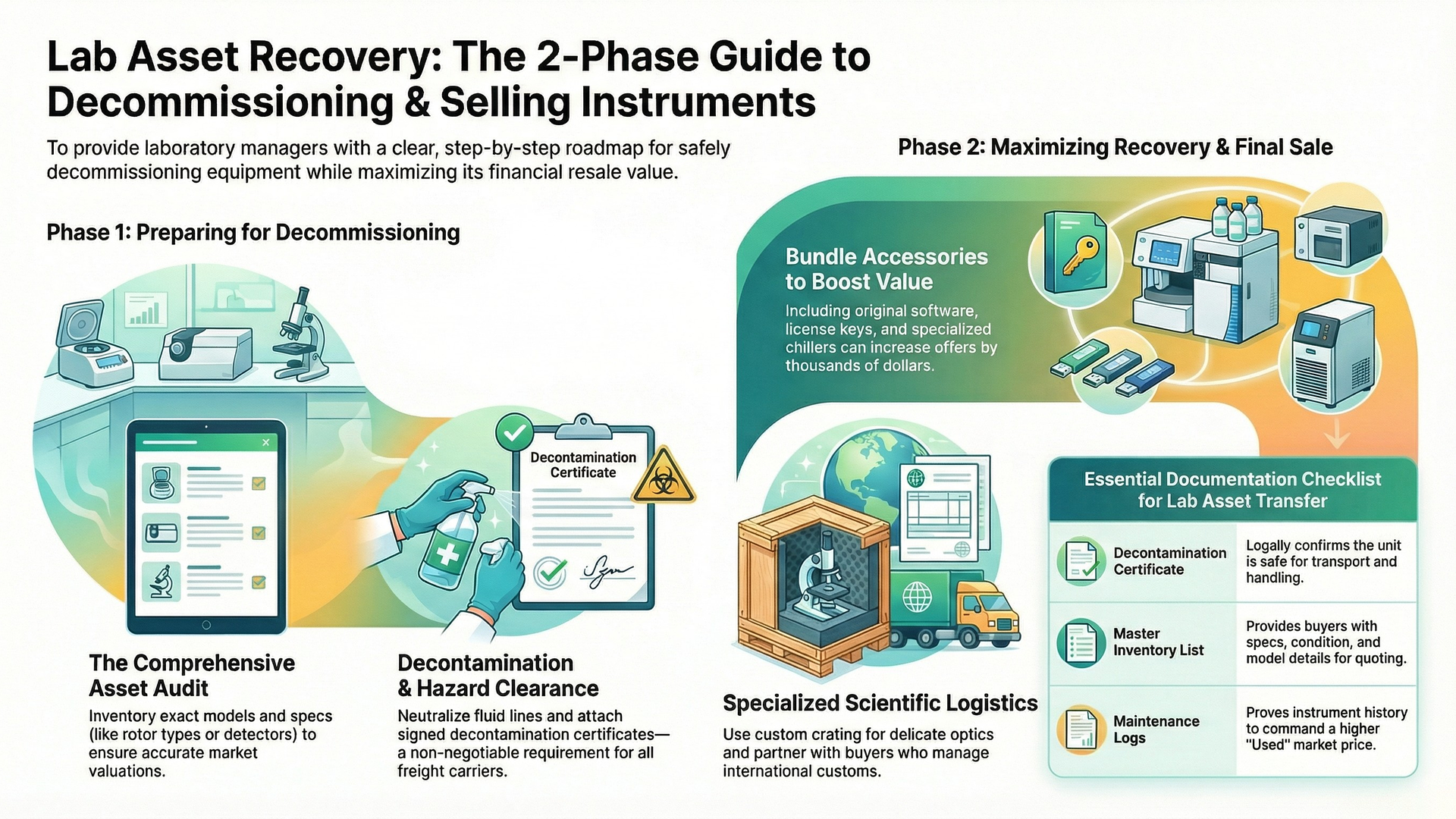
Phase 1: The Lab Decommissioning Process
Decommissioning is the formal process of neutralizing a lab space and its equipment. Before any instrument can be sold or moved, it must be legally and environmentally cleared.
1. Conduct a Comprehensive Asset Audit
Before disconnecting a single power cord, create a master inventory list. Buyers need specific details to provide accurate market valuations. Your audit should capture:
- Manufacturer and Exact Model: (e.g., Agilent 1260 Infinity II, Thermo Fisher QuantStudio 5).
- Key Specifications: Note configurations, rotor types for centrifuges, or detector types for chromatography systems.
- Current Condition: Be transparent. Accurately categorizing items as "Used/Inspected," "Parts Only," or "Like New" streamlines the quoting process.
2. Decontamination and Clearance
No reputable buyer will accept equipment that poses biological, chemical, or radiological risks.
- Surface Cleaning: Thoroughly scrub and disinfect all incubators, biosafety cabinets, and benchtop instruments.
- System Flushing: Drain and neutralize fluid lines in HPLCs, flow cytometers, and clinical analyzers.
- Documentation: Attach a signed decontamination certificate or hazard clearance tag to every single instrument. This is a non-negotiable step for freight carriers and buyers alike.
Phase 2: Maximizing Your Lab Asset Recovery Value
Once the equipment is safe to handle, your goal shifts to protecting its resale value. The secondary market for refurbished lab equipment is highly competitive, and small details make a significant financial difference.
Consolidate Accessories and Software
An instrument sold with its original accessories commands a much higher price than a bare unit. Gather all related components:
- Control PCs, proprietary software discs, and license transfer keys.
- Power cables, vacuum pumps, and specialized chillers.
- Operating manuals and historical maintenance logs.
Expert Tip: When a buyer evaluates a used mass spectrometer or PCR system, missing software or a lost roughing pump can drop the offer by thousands of dollars. Always package the complete system together.
Phase 3: Selling Your Surplus Lab Instruments
With your equipment decontaminated and inventoried, it is time to turn those assets into capital. Partnering with a professional equipment buyer simplifies the administrative burden.
1. Securing Competitive Market Pricing
Send your master inventory list to an established dealer. Look for partners who base their offers on current, competitive market pricing for "Used" condition instruments, rather than flat liquidation rates. A proper B2B buyer will evaluate the exact specifications and current market demand to issue a formal quote.
2. Streamlining the Paperwork
Selling capital equipment requires clean administrative execution. A professional buyer will work directly with your finance or procurement department to handle the necessary Purchase Orders (POs) and Invoices. Ensuring that ownership transfers are legally documented protects your institution from future liabilities.
3. Professional Logistics and Freight
Moving sensitive scientific machinery is not a job for standard movers. The final step involves specialized logistics:
- Custom Crating: Essential for delicate optics in microscopes or lasers in flow cytometers.
- Global Reach: If the buyer has an established network, they will manage the complexities of freight, handling everything from local dock pickups to complex international shipping and customs documentation.
Turn Your Idle Instruments into Capital
Effective decommissioning of laboratory instruments protects your liability, while a smart asset recovery strategy protects your budget. By maintaining strict standards of cleanliness, providing transparent condition notes, and partnering with experienced logistics and purchasing professionals, you can seamlessly transition your lab to its next phase.