
In the fast-paced environment of modern research, the bottleneck is rarely the ideas—it is the execution. For small to mid-sized laboratories, the transition from manual pipetting to automated liquid handling is often viewed as a luxury reserved for "Big Pharma." However, as we move through 2026, the economic and technical landscape has shifted.
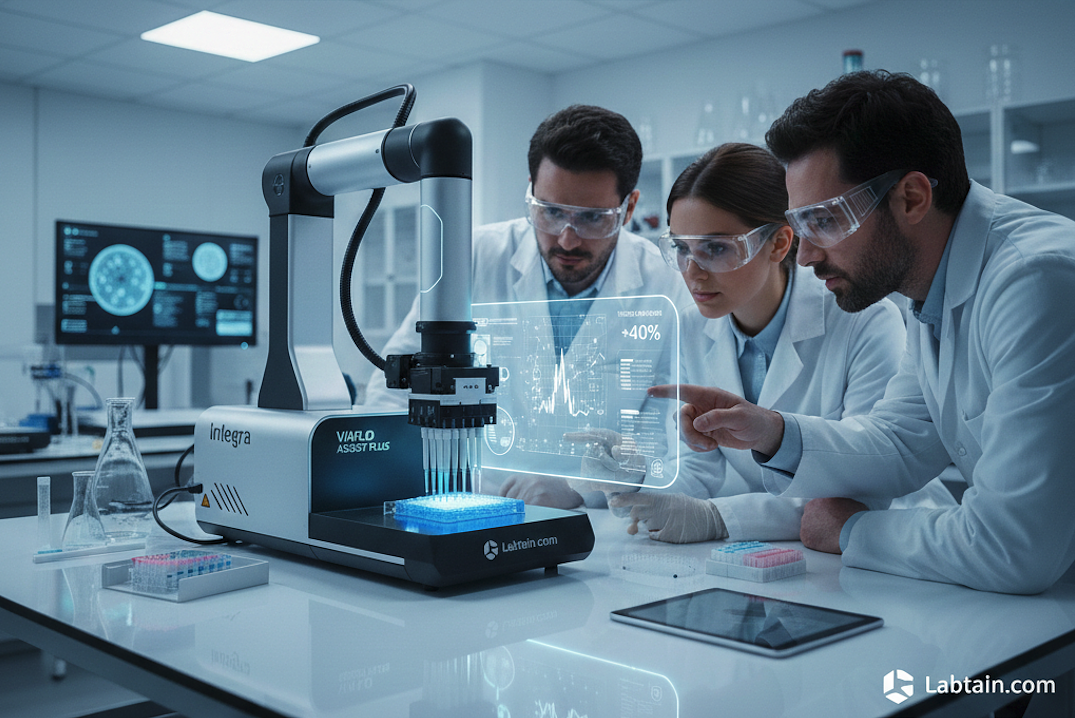
At Labtain, we see firsthand how integrating units like the Integra VIAFLO or Assist Plus transforms workflow from tedious manual labor into a streamlined, high-throughput operation.
The Hidden Cost of "Manual"
Manual pipetting is more than just slow; it is a liability. Human error, parallax errors, and repetitive strain injuries (RSI) contribute to inconsistent data and costly re-runs. For a small lab, one failed 96-well plate due to a pipetting offset can represent a significant loss in both reagents and time.
Technical Advantages of Automation
Automated systems provide a level of precision that even the most experienced technician cannot replicate over an eight-hour shift.
- Superior Repeatability: Systems ensure that every dispense, from the first to the 384th well, is identical in volume and velocity.
- Contamination Control: Automated tip-spacing and controlled aspiration speeds minimize aerosol formation and cross-contamination.
- Multitasking Capabilities: Automation allows your staff to focus on data analysis and experimental design rather than the mechanical act of liquid transfer.
Is the Investment Justified for Small Labs?
The primary barrier to entry is typically the "sticker shock" of brand-new equipment. This is where the Labtain Advantage comes into play. By opting for Used/Inspected high-end units, small labs can bridge the gap between manual processes and full automation at a fraction of the OEM cost.
Key Features to Consider:
When evaluating an automated liquid handler for a smaller footprint, look for these technical benchmarks:
- Modular Design: Ability to swap between single, 8, 12, and 16-channel pipettes.
- Small Footprint: Units like the Integra Assist Plus are designed to fit into standard flow hoods or onto crowded benchtops.
- Software Intuition: Ensure the interface allows for rapid protocol adjustments without needing a dedicated programmer.
The Labtain Standard: Transparent Reliability
We understand that for a small lab, every piece of equipment must be "mission-critical" ready. That is why our inventory—including industry leaders like Integra, Eppendorf, and Hamilton—undergoes a rigorous inspection process.
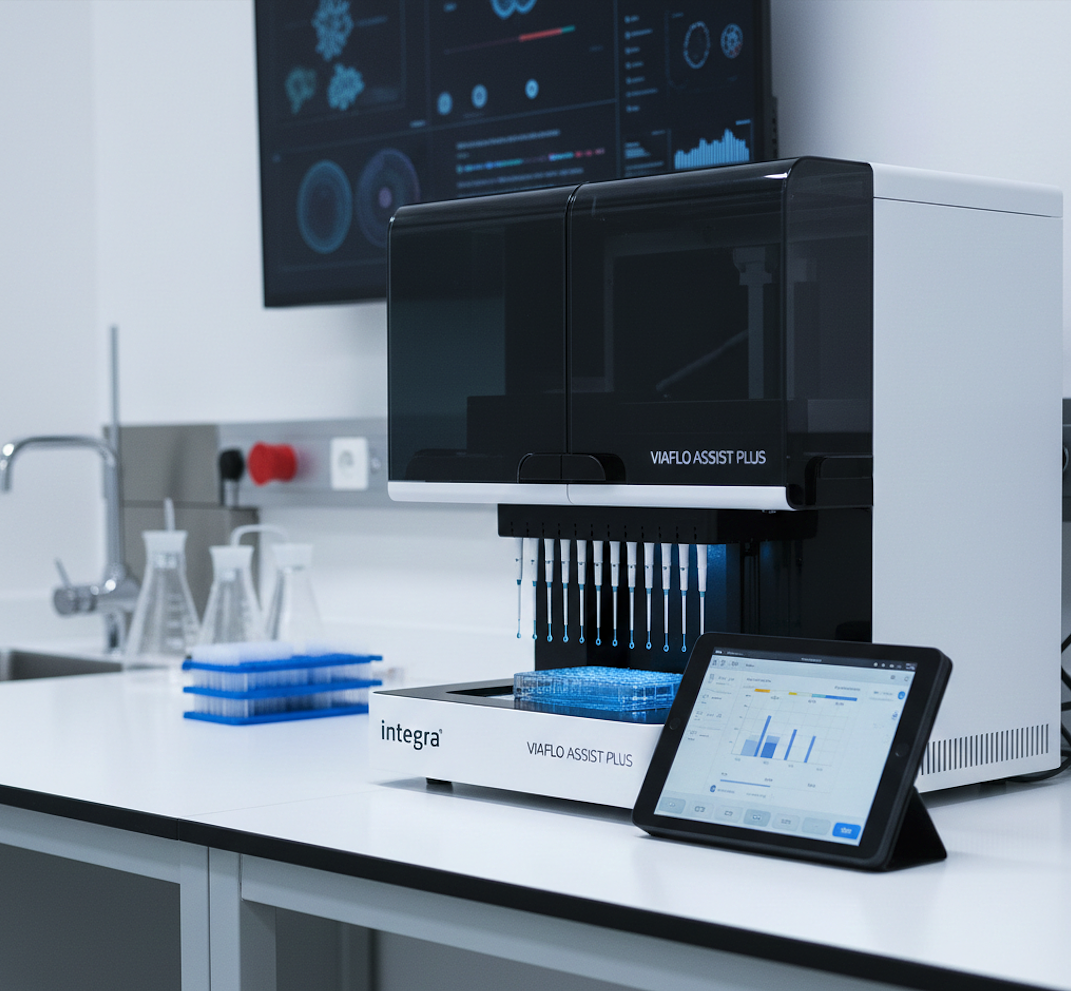
Condition Note: Most of our automated liquid handlers are classified as Used/Inspected. This means they have been technically verified for mechanical alignment, electronic integrity, and volume accuracy before they ever reach our shipping dock in Washington.
Final Verdict
Is it worth it? If your lab spends more than 5 hours a week on repetitive liquid transfer, the ROI (Return on Investment) on a refurbished automated system is typically realized within the first 6 to 8 months. You aren't just buying a machine; you are buying data integrity and scalable throughput.